
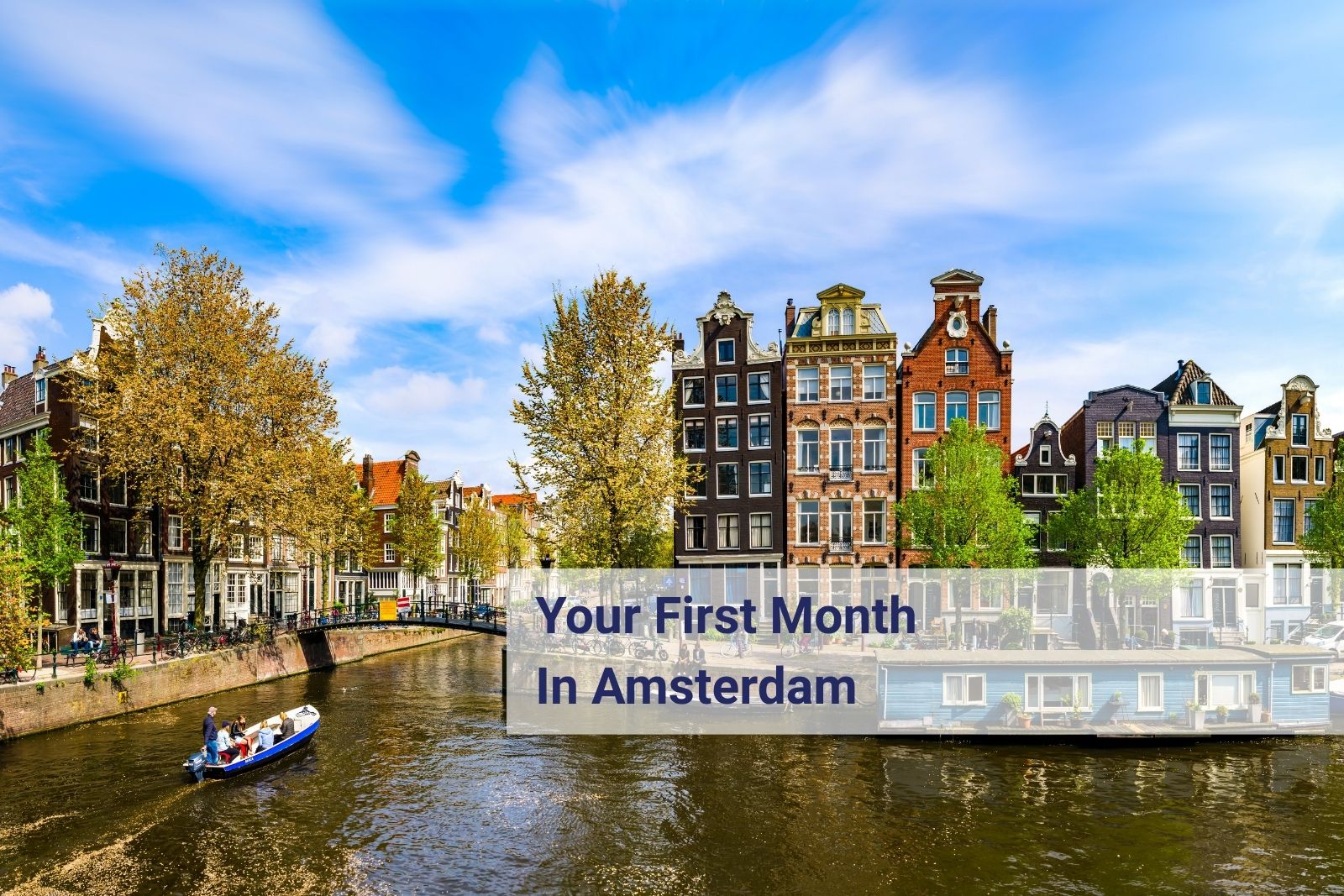
Moving to Amsterdam and visiting Amsterdam are two very different experiences.
As a visitor, you notice the canals, museums, bicycles, historic buildings, and cafés. Once you live there, you start noticing completely different things: how to get around without thinking about it, where everyone puts their trash, why you need a BSN, how often you actually go grocery shopping, and just how seriously Amsterdam takes bicycle traffic.
Your first month is when the city starts changing from somewhere you explored on vacation into somewhere you actually know how to live.
If you’re moving to Amsterdam from the US, here are some of the everyday adjustments and practical details you can expect during those first few weeks.
First, You’ll Have Some Administrative Tasks to Handle
Before you can completely settle into Amsterdam life, there are a few practical matters to take care of.
One of the most important is registering with the municipality. When you register as a resident, you receive your BSN (burgerservicenummer), or citizen service number. You’ll use your BSN in your interactions with the Dutch government and for many of the practical things involved in establishing yourself in the Netherlands.
Exactly what you need to do will depend on your circumstances, so check the current requirements with the City of Amsterdam and Dutch government before your move rather than relying on an old expat checklist.
Once some of that paperwork is out of the way, the more interesting part begins: figuring out how to actually live in Amsterdam.
You’ll Learn to Look for Bikes Before You Look for Cars
You’ve probably heard that Amsterdam is a cycling city. Knowing that and actually living in it are two different things.
Bike lanes are part of the transportation network, not recreational paths. During your first few days, simply crossing the street can require some recalibration. You may need to cross a bike lane, vehicle lane, and tram tracks before reaching the other side.
If you decide to cycle, you’ll also be joining people who have been using bikes as transportation for most of their lives. Pay attention to the rules and flow of traffic before setting off through the busiest parts of the city.
That doesn’t mean you have to give up your car, either. Plenty of people moving internationally choose to bring a vehicle, particularly if they expect to commute or travel outside central Amsterdam. Your combination of driving, cycling, walking, and public transportation will depend on where you live and how you spend your time.
You’ll Probably Stop Buying Groceries the American Way
If you’re accustomed to driving to a large supermarket and stocking up for a week or two, grocery shopping in Amsterdam may change your routine.
Neighborhood supermarkets and specialty shops make it easy to buy smaller amounts more frequently. And if you’re carrying groceries home on foot or by bicycle, there’s an obvious limit to how much you want to buy at once.
You’ll also encounter stores and markets that become part of your neighborhood routine. Albert Heijn is one of the supermarket names you’ll see frequently, while outdoor markets such as the Albert Cuyp Market offer everything from produce and cheese to flowers and household items.
After a few weeks, you may find yourself thinking less in terms of the weekly “grocery run” and more about picking up what you need on the way home.
You’ll Discover That Trash Day Doesn’t Necessarily Look Like Trash Day
This is exactly the kind of mundane detail nobody thinks about until they live somewhere new.
Waste collection in Amsterdam varies by neighborhood and the type of waste. In many areas, residents use neighborhood containers rather than putting large garbage cans at the curb once a week. Some underground containers may also require an access card.
There are separate options for materials such as glass, paper, textiles, and bulky waste.
It isn’t difficult once you know how your neighborhood works, but during your first week you may find yourself wondering where you’re actually supposed to put a bag of trash.
The City of Amsterdam lets residents check waste information for their address, which is much more useful than assuming the system works the same throughout the city.
Your Home May Have a Few Surprises
Amsterdam’s architecture is one of its biggest attractions, but living inside those historic buildings can be an adjustment.
Depending on where you live, you might encounter steep staircases, narrow halls, smaller rooms, unusual layouts, or limited storage. Some buildings have been extensively modernized; others retain much more of their original character.
This can become particularly noticeable when your household shipment arrives.
A sofa that looked perfectly reasonable in an American living room can look considerably larger at the bottom of a narrow Amsterdam staircase. Access to the building, stairs, elevators, and the size of larger furniture are all worth discussing with your international mover before delivery.
Amsterdam has a long history of finding creative ways to get belongings into upper floors of narrow buildings. Those beams and hooks you see near the tops of many canal houses aren’t just decorative reminders of the past.
You’ll Start Understanding Your Neighborhood Instead of Just “Amsterdam”
Before moving, you may think primarily about Amsterdam as one city. Once you’re living there, your neighborhood starts mattering much more.
Jordaan doesn’t feel exactly like De Pijp. Amsterdam-Noord has a different character from Oud-West. Your favorite bakery, grocery store, park, tram stop, café, and bike route will probably all be relatively close to home.
During your first month, spend some time exploring your immediate surroundings instead of constantly heading toward the major attractions.
Knowing where to buy groceries at 7 p.m. on a Tuesday will eventually matter a lot more than knowing the quickest route to the Rijksmuseum.
You May Be Surprised by How Little English Slows You Down
Moving somewhere with a different official language can be intimidating, but Amsterdam is relatively easy for English-speaking newcomers to navigate.
You’ll encounter English frequently, particularly in Amsterdam’s international businesses and communities. That can make your first few weeks considerably easier while you’re still learning your surroundings.
But being able to get by in English isn’t the same as never needing Dutch.
Learning greetings, numbers, food terms, signs, and other everyday vocabulary can make the city easier to navigate and helps you become more connected to the place you’ve chosen to live.
You don’t need to arrive fluent. Your first month is a great time to start.
Your Belongings May Still Be on Their Way
You can be living in Amsterdam before all of your belongings are.
When you’re moving from the US, your household goods travel separately from you, and international shipping involves several stages before final delivery. That’s why your first Amsterdam home may feel a little temporary at the beginning even after you’ve officially moved in.
If your shipment hasn’t arrived yet, use the time to get a better sense of your space.
Once your household goods clear customs and are ready for delivery, you’ll already know more about your building, access, storage, and where you actually want everything to go.
If you’re bringing a car as part of your move, there are additional steps after import as well. Vehicles shipped to the Netherlands need to go through the applicable Dutch registration process, so this is another part of the relocation worth planning before you leave the US.
You’ll Realize You Don’t Have to Do All the Tourist Things Right Away
One of the best parts about moving to Amsterdam is that you aren’t on vacation.
You don’t need to fit the Rijksmuseum, Van Gogh Museum, Anne Frank House, canal tour, Vondelpark, and every restaurant recommendation into four days.
You can visit a museum on a rainy Saturday. Walk along the canals after dinner. Explore a different neighborhood next weekend. Take a train somewhere new when you feel like it.
That change in mindset is one of the moments when Amsterdam starts feeling like home.
You’re no longer trying to experience the city before you leave. You live here now.
By the End of the Month, the Little Things Start Feeling Normal
Your first month in Amsterdam probably won’t be defined by one huge cultural adjustment. It’s more likely to be dozens of little ones.
You’ll get better at crossing bike lanes. You’ll know where the trash goes. You’ll stop looking up your tram route every time you leave home. You’ll have a preferred grocery store. You’ll recognize streets without checking your phone.
And eventually you’ll have your furniture, belongings, and familiar things around you again. That’s when an international move starts feeling less like a move and more like a new home.
Moving to Amsterdam from the US?
If you’re still planning your move, Schumacher Cargo Logistics can help get your household goods and vehicles from the US to Amsterdam.
Schumacher has been handling international moves since 1977 and is a full-service international moving company. Our team can help coordinate the overseas shipping process while you focus on everything waiting for you once you arrive.
Ready to start planning? Request an international moving quote for your move to Amsterdam.
