
For many Americans, moving to the Netherlands starts with a familiar picture: canals, bicycles, windmills, and charming European cities. While some of those stereotypes are true, daily life in the Netherlands often feels very different from what many newcomers expect.
Some surprises are practical. Others are cultural. There are many things people do not fully appreciate until they are living there themselves.
Whether you are relocating for work, family, retirement, or a lifestyle change, understanding these differences ahead of time can help make your transition smoother and less stressful.
If you are considering an international relocation, our guide to moving to the Netherlands from the US provides a broader overview of the moving process, shipping options, and relocation planning.
The Bicycle Culture Is Bigger Than You Imagine
Most Americans know that bicycles are popular in the Netherlands.
What often surprises people is how completely integrated cycling is into everyday life.
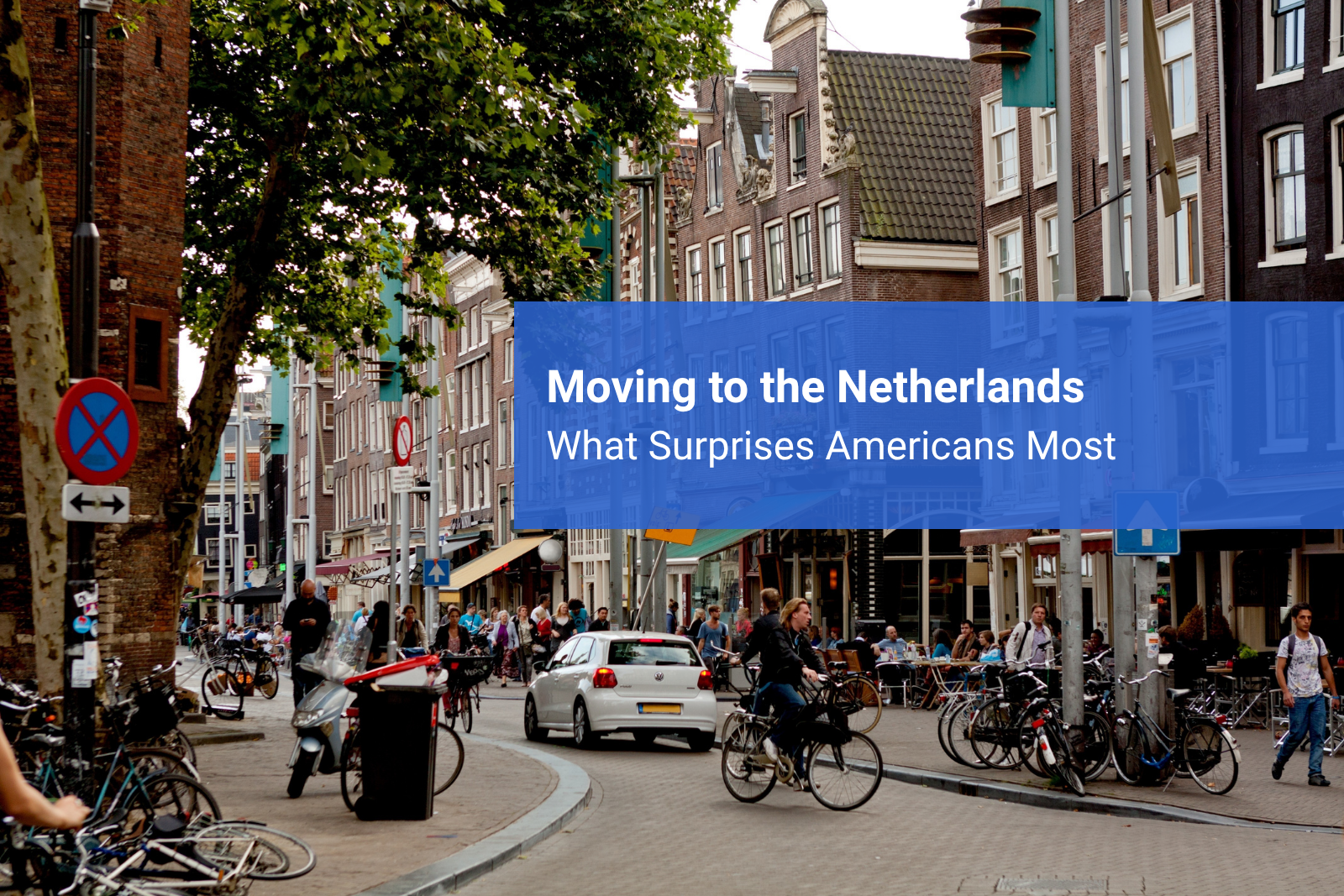
In many Dutch cities, bicycles are not simply recreational transportation. They are a primary way people commute to work, run errands, attend school, and navigate daily life. Children often bike to school on their own or with their parents, and it is common to see families using cargo bikes to transport younger children. Dedicated cycling infrastructure is everywhere, making these trips safer and more practical, and many residents use bicycles more frequently than cars.
For Americans accustomed to driving almost everywhere, adapting to a cycling-focused culture can be one of the biggest lifestyle changes after moving to the Netherlands.
The Country Feels Smaller Than You Expect
The Netherlands may not appear small on a map, but many Americans are surprised by how quickly they can travel between major cities.
Places such as Amsterdam, Rotterdam, The Hague, Utrecht, and Eindhoven are connected by an extensive public transportation network, making travel throughout the country relatively easy.
Many people discover that distances they would consider a long commute in the United States feel much more manageable in the Netherlands. For example, traveling from Amsterdam to Rotterdam takes about 40 minutes by train, connecting two of the country’s largest cities. Thanks to frequent rail service, reliable schedules, and the ability to work or relax during the journey, many people view these trips as a routine part of daily life rather than a lengthy, stressful commute.
Public Transportation Changes Daily Life
For many Americans, daily life revolves around a personal vehicle.
In the Netherlands, trains, trams, buses, ferries, and bicycles often play a much larger role. Many residents can comfortably live without owning a car, particularly in larger cities. Public transportation is reliable, widely available, and integrated into everyday routines.
While the Netherlands is geographically compact, commuting is still a normal part of daily life. According to Dutch mobility data, the average one-way commute is roughly 17 to 20 miles (27 to 32 kilometers), though this varies by region and occupation. What surprises many Americans is not that people commute less, but that they often combine trains, bicycles, buses, and walking instead of relying on a car. A worker might cycle to a train station, take a train to another city, and then bike the final stretch to the office. This compact geography and multimodal transportation system influence housing decisions, commuting habits, and overall lifestyle.
For newcomers, this often becomes one of the most appreciated aspects of living in the Netherlands.
Housing Can Be an Adjustment
One of the most common surprises for Americans is housing.
Dutch homes and apartments are often smaller than what many people are used to in the United States. According to recent housing data, the average newly built single-family home in the US is typically around 2,400 to 2,500 square feet, while the average Dutch home is closer to 1,200 to 1,400 square feet. Even allowing for differences in housing types and urban density, many Americans find they are adjusting to significantly less living space.
In terms of housing style, some parts of the Netherlands may feel familiar to people who have lived in dense urban areas of the Northeast, such as Boston, Philadelphia, or certain neighborhoods in New York City, where row houses, townhomes, and compact living spaces are more common. However, Dutch homes are often even narrower and more space-efficient than their American counterparts.
Storage space may be more limited, rooms can feel more compact, and older buildings sometimes have steep, narrow staircases that make moving large furniture challenging.
This is one reason many people moving to the Netherlands take a careful look at what they actually need to bring with them before relocating overseas.
The housing market in some cities can also be highly competitive, making advance planning especially important.
Dutch Communication Is Often More Direct
Many Americans initially interpret Dutch communication styles as blunt or unusually direct. In reality, directness is generally viewed as efficient and honest within Dutch culture.
For example, an American manager might say, “This presentation looks good overall, but there are a few areas we could improve before the client meeting.” A Dutch colleague may simply say, “The presentation needs more data on slide three, and the conclusion is unclear.”
Similarly, in social situations, an American might soften a response with phrases like “Maybe,” “We’ll see,” or “That could be difficult.” In the Netherlands, people are often more likely to give a straightforward yes or no answer.
People in the Netherlands are often more comfortable expressing opinions, asking questions, or providing feedback without the level of small talk or indirect language that Americans often use.
While it can feel surprising at first, many expatriates eventually come to appreciate the clarity this communication style provides.
Work-Life Balance May Feel Different
Many Americans moving to the Netherlands notice differences in workplace culture and personal time.
While every employer is different, Dutch culture generally places a strong emphasis on balancing work with family, recreation, and personal well-being.
A typical full-time work week is often around 36 to 40 hours, and part-time work arrangements are common across many industries. It is not unusual for employees to have schedules that allow for greater flexibility than what some Americans may be accustomed to.
Vacation time is another area where newcomers often notice a difference. Dutch employees generally receive more paid vacation days than the average American worker, and taking that time off is widely encouraged. Many people fully disconnect from work during holidays and vacations, helping create a clearer separation between professional and personal life.
For some newcomers, this becomes one of the most positive surprises of the relocation experience.
Grocery Shopping and Daily Routines Are Different
Many Americans are accustomed to driving to large grocery stores and buying a week’s worth of food at once.
In the Netherlands, smaller shopping trips are often more common. Homes may have less storage space, and many people stop at neighborhood markets, bakeries, or grocery stores several times throughout the week.
These daily routines can feel different at first, but often become part of the appeal of Dutch life.
The Weather Is Not What Many People Expect
Some Americans imagine the Netherlands as having extremely cold weather year-round.
The reality is often much milder. Many Americans find the climate comparable to parts of the Pacific Northwest, particularly cities like Seattle or Portland, where temperatures are generally moderate, and rain is common throughout the year. Coastal areas of Northern California can also offer a somewhat similar experience, with relatively mild temperatures and frequent overcast days.
The country experiences four seasons, but temperatures are generally moderated by its maritime climate. What many newcomers notice more than the temperature itself is the frequency of cloudy days, rain, and changing weather conditions.
Learning to embrace occasional rain becomes part of everyday life for many Dutch residents.
What This Means for Your Move
Many of the surprises people experience after moving to the Netherlands have less to do with logistics and more to do with daily living.
Understanding how people travel, communicate, work, shop, and spend their free time can make the adjustment much easier once you arrive.
At the same time, practical planning remains important. Housing availability, shipment size, destination city, and relocation timelines can all influence how smoothly your move unfolds.
Planning Your Move to the Netherlands
Moving to the Netherlands from the US is an exciting opportunity to experience a different pace of life, a highly connected transportation system, and a country known for its international outlook, multicultural cities, and diverse population.
While some aspects of Dutch life may surprise you, many Americans find the transition easier than expected once they settle into their new routines.
If you are planning a move to the Netherlands, Schumacher Cargo Logistics can help you navigate the relocation process and prepare for a successful transition overseas. Request a quote to start planning your move today.
